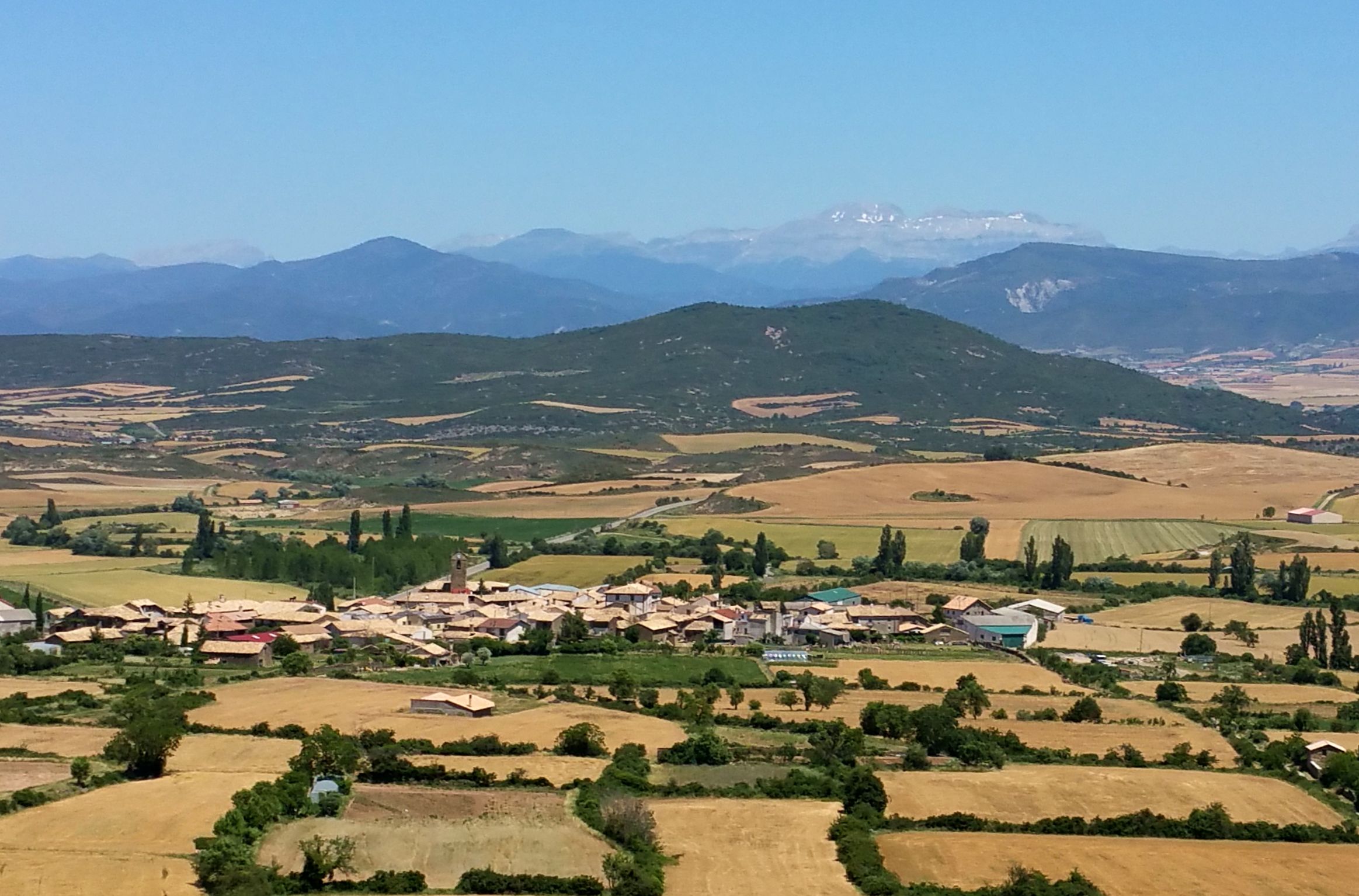
Jacetania, Huesca
The Village of Bailo
History, heritage and surroundings of the village of Bailo, in the Huesca part of Jacetania.
Geography and population
Town and surroundings
Bailo is a municipality in the Jacetania district, in the Huesca Pyrenees, at the foot of the Sierra de San Juan de la Peña. With 265 inhabitants (INE, January 2025) and a municipal area of 164.4 km², it also includes the settlements of Arbúés, Alastuey, Arrés and Larués. The village stands on a small hill on the medieval route of the Camino de Santiago, along the historic corridor linking the Pyrenean valleys with the Hoya de Huesca.
Since the 10th century
One of Aragón’s royal seats
The area preserves remains of a Roman settlement, including a documented necropolis, and Bailo is already mentioned in the 10th century as an organised territory, the medieval Bailés, alongside settlements such as Arbúés, Larués and Arrés. Before Jaca became established as the kingdom’s capital under Ramiro I in the 11th century, Bailo was one of the itinerant seats of the court of the young Kingdom of Aragón. It is precisely this status as a Royal Seat that the Historical Re-enactment revives in each edition with the arrival of the Holy Grail. You can read more in History and Legend.
What to see
Heritage
The church of San Fructuoso, formerly San Pedro de la Sede Real, is the main building in the village. Built between the 15th and 16th centuries in a late Gothic style with Renaissance influences, it has a Latin-cross plan, a Gothic doorway with pointed archivolts and star-ribbed vaults. It preserves a holy-water font made from a reused Romanesque capital, and its tower is considered a remnant of the former royal castle. The village’s traditional architecture also includes heraldic houses from the 15th and 16th centuries, such as Casa Achesa and Casa Samper, the latter with a two-light window with Gothic tracery.
Nearby
Area and directions
Bailo is just over 20 km from Jaca and close to the Yesa reservoir, in the mountain landscape of the Aragonese Pyrenees with hiking and cycle-touring routes. Local food includes ternasco, migas and longaniza, as well as wines from the area.